
Shadow work is: a psychological practice that involves exploring and integrating the repressed or hidden parts of ourselves, often referred to as the “shadow,” to achieve personal growth and self-awareness.
Shadow work is a theory proposed by Swiss psychiatrist Carl Jung. According to Jung, our shadow is described as parts of our personalities we deem unacceptable or unpleasant, such as traits, emotions, and memories. Shadow work, therefore, engages in confronting these … undesirables for a more complete understanding of themselves.
The goal of shadow work is to integrate these repressed parts into our consciousness and by doing so, we can:
- Enhance Self-Awareness
- Promote Healing
- Foster Personal Growth
Jordan Thornton recommends 6 book references to read on his YouTube video Shadow Work relating to this theory and an entire collection of books to help any further understanding. The six books recommended are:
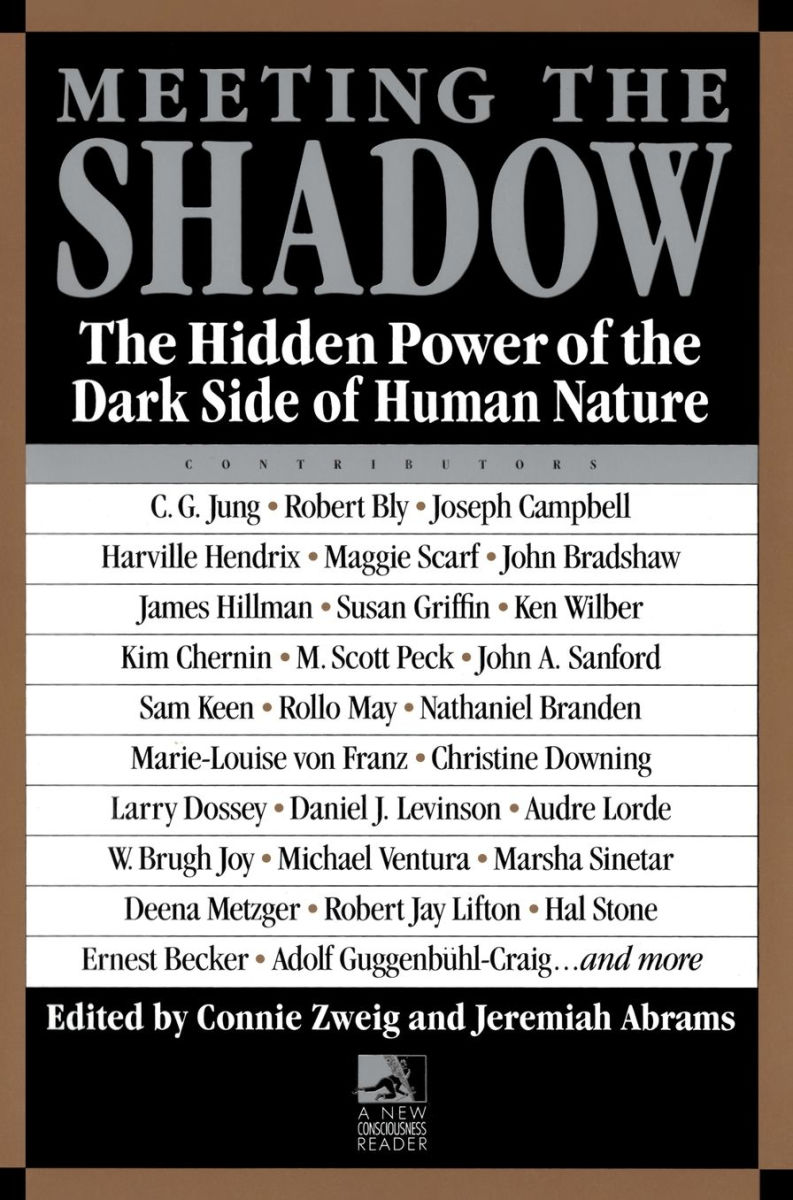
Meeting the Shadow
This book is, single-handedly, the most significant first book related to shadow work. It is compiled of 65 essays written by 50 authors and edited by Connie Zweig and Jeremiah Abrams. Thornton describes it as ‘similar to a trampoline’ as it’s a great jump-off point or launching pad for entry-level understanding. This quick reference guide, similar to the Chicken Soup series, is essential to one’s deeper understanding. With ten different approaches to shadow work, one can bounce away and come back with ease. I, personally, have bought a copy from Barnes and Noble, and am SUPER excited about having the physical copy in hand! The essays are easy and quick to read, however full of information. Overall, Meeting the Shadow is a must-have.

Archetype: A Natural History of the Self
This breakthrough book is written by Anthony Stevens. In it, he explains the discovery of how to open up this long-ignored scientific approach to the archetype. Archetypes were described by Jung as biological entities that have evolved through natural selection. This book views the crossing points of biological reality and Jungian theory. Are we all living out an unconscious design? Is the phenogenetic baseline we emerge from -> unconsciousness vs consciousness – coded into our genes? Are we just playing out what was already designed for us? I have not read this one; however, it is definitely on my list, so I can learn about my own conscious vs unconscious design.
Healing the Child Within
This is an excellent introductory book of child-healing work written by Charles Whitfield, MD. The concept of healing the ‘child within’ has become more popular in recent years. This book explains why we experience difficulties in resolving emotional trauma and provides practical guidelines in the healing process. The Inner Child is the alive, energetic, creative, and fulfilled parts of us. Who we truly are. There is plenty of eye-candy inside, with a variety of tables, diagrams, and whatnot embedded throughout. Thornton, in his opinion, shares that he doesn’t completely agree with parts of the conceptualization in the book. He cautions us to keep in mind that the inner child cannot be our real selves, as our real self doesn’t have a time frame. The ten-year-old you and the forty-year-old you are both the same person. When are you your real self? All of you is all of you! He suggests to not trap yourself in your past, as you can then lock yourself into a regressive consciousness, which will keep you from any future prospects. This book expresses what separates child-like behavior, and the elder-consciousness as the appropriateness of the situation. This is a great book to extract principles that you can integrate into your daily life, and is highly recommended by therapists and survivors of trauma.
The Betrayal of the Body
This book, written by Alexander Lowen, MD, provides a great entry-level understanding of the mind-body split. Thornton states that it is the single best modality for grasping the concepts of self-therapeutic work. This book illustrates the energetic factors behind the split, the factors that produce it, and the proven therapeutic techniques that are available to treat it. It helps in understanding the most common destructive patterns of humans: depression/anxiety, levels of sensuality, reality, needs, and feelings about their bodies. Lowen explores the mind-body duality in the individual and its parallel duality and dysfunction in society between culture and nature, and between thinking and feeling. Thornton states this is a TOP TEN book for healing.
Co-Dependence: Healing the Human Condition
Co-dependence is a feeling disorder and the base of all addictions. Charles Whitfield, MD, strikes again with this beautiful, eye-appeasing book. The misunderstood concept of co-dependence is explained clearly and completely. Dr. Whitfield is a frontline clinician who has been assisting co-dependents in their healing for over twenty years. The information in this book doesn’t pertain to just ‘housewives’ and people pleasers. It is also targeted at men and those who fight addiction. It’s for anyone who’s experienced this painful and confusing part of the human condition. Co-dependency is treatable, and Whitfield describes how it comes about and how to heal from it!
Psychosynthesis: A Psychology of the Spirit
Thornton believes this is the best book on the topic and regrets not reading it years before. Authors John Firman and Ann Gila give a comprehensive account of Roberto Assagioli’s Psychosynthesis. Psychosynthesis is a type of therapy that addresses both spiritual development and psychological healing and growth by recognizing and supporting one’s own unique path of self-realization. The authors present a comprehensive account of psychosynthesis, providing a ‘transpersonal integration of developmental, personality, and clinical theory’. Some of the relationships revealed are:
- psychosynthesis and contemporary developmental research
- object relations theory
- intersubjective psycholoy
- trauma theory
- the recovery movement
- Jungian psychology
- humanistic and transpersonal psychology
- common psychologic diagnoses
Personally, this is my next book, and I have started it this morning! Thus far, it is easy to grasp and fun with all the eye-candy-diagrams.
Good luck with your healing and your self-awareness journey!
Peace and understanding sent your way
*Nix
 F*CK NORMAL
Leave a comment